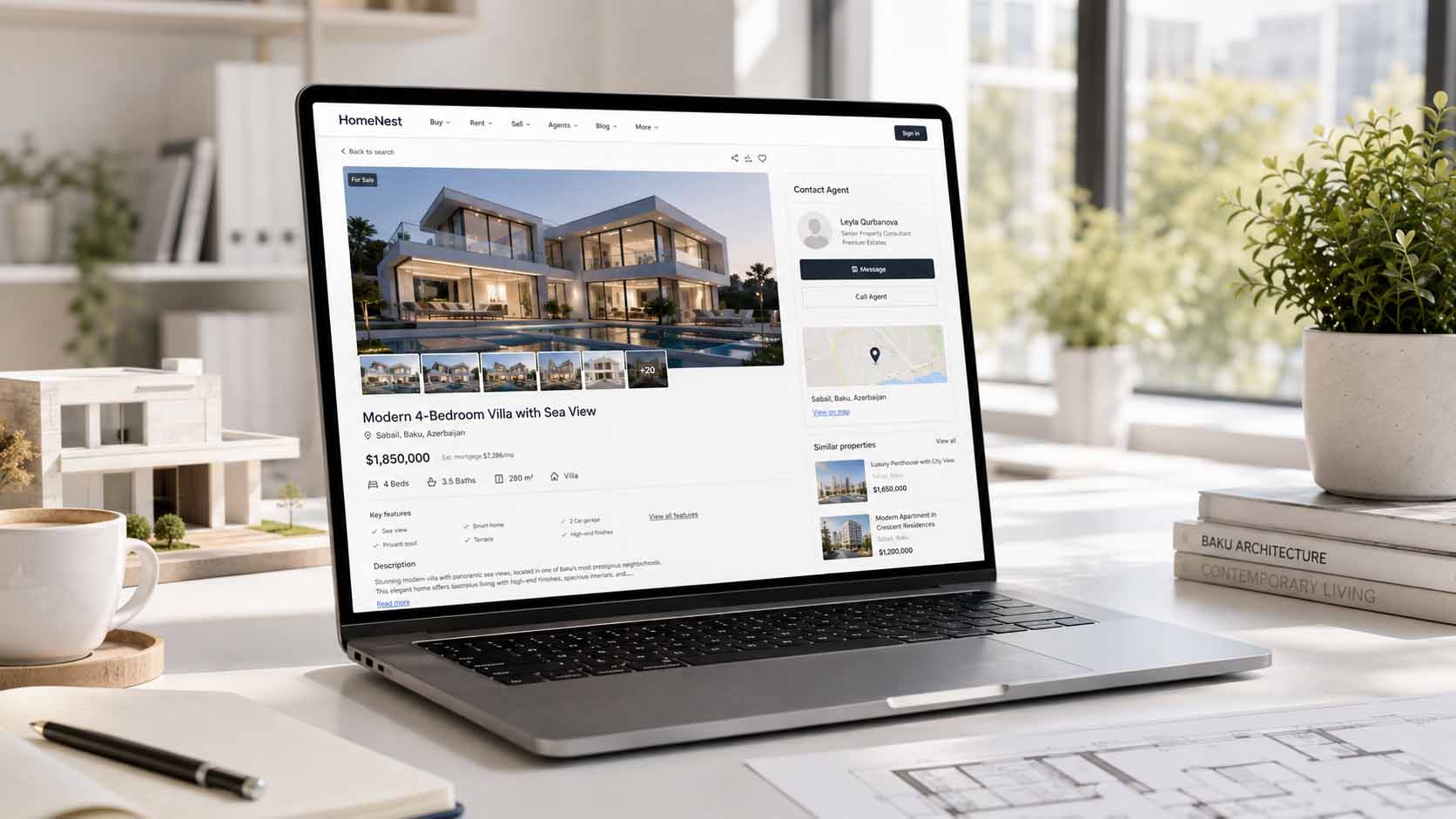
What Makes a Great Property Detail Page in 2027?
A property detail page is where interest becomes intent. Search and filtering may help a user discover a listing, but the property page is where they decide whether the place is worth contacting an agent about, saving for later, or sharing with someone else.
A property detail page is where interest becomes intent.
Search and filtering may help a user discover a listing, but the property page is where they decide whether the place is worth contacting an agent about, saving for later, or sharing with someone else.
That makes this page one of the most important parts of any real estate platform.
While working on platforms like HomeNest, I found that a strong property page needs to do two things at the same time: present the property attractively and answer practical questions quickly.
If either side is missing, the experience feels incomplete.
The Page Should Answer the Basics Immediately
Users should not have to search through long paragraphs to find essential information.
The most important details should be visible near the top of the page.
That usually includes:
- Property title
- Price
- Location
- Property type
- Bedrooms
- Bathrooms
- Size
- Sale or rental status
These details act like a quick summary.
If the user is interested, they can continue deeper into the page.
If not, they can return to the results without wasting time.
Photography Still Does Most of the Selling
Real estate is extremely visual.
A strong gallery can communicate far more than a long description.
But simply uploading large images is not enough.
A good property gallery should feel fast and easy to explore.
That means thinking about:
- Image order
- Thumbnail previews
- Full-screen viewing
- Mobile gestures
- Image loading speed
- Responsive sizes
The first image is especially important because it often becomes the main card image in search results and may also appear in social previews.
Descriptions Should Add Context, Not Repeat Data
A weak property description often repeats information users can already see.
For example:
“This apartment has 3 bedrooms, 2 bathrooms, and is located in Baku.”
If all of that is already visible above, the description is not adding much value.
A better description explains what makes the property interesting.
It can describe:
- Layout
- Natural light
- Renovation quality
- Balcony or view
- Building features
- Neighborhood character
- Nearby amenities
- Investment potential
Structured data and narrative content should complement each other.
Location Deserves More Than an Address
A street address alone does not always tell the full story.
Users often want to understand what is around the property.
A stronger page can include:
- Map
- Nearby schools
- Parks
- Shopping
- Public transport
- Restaurants
- Business districts
This makes the listing more useful and also connects naturally with location-based pages on the platform.
For example, a property in Baku can link back to a broader Baku location page, while the location page links to relevant listings.
That creates a stronger internal structure for both users and SEO.
Contact Actions Should Be Easy to Find
One of the most common mistakes on property pages is making the contact option too difficult to reach.
If a visitor is interested, the next step should be obvious.
Useful actions include:
- Contact agent
- Send inquiry
- Call
- Schedule viewing
- Request more details
On mobile, these actions can remain visible as sticky buttons.
The goal is to reduce friction between interest and contact.
Agent Information Builds Trust
If the listing belongs to an agent, their profile should be easy to identify.
Useful information may include:
- Name
- Profile photo
- Phone
- Languages
- Specialization
- Other listings
This is especially important for larger marketplaces where users may interact with different agents depending on the property.
A clear agent profile makes the experience feel more personal and trustworthy.
Similar Properties Can Keep Users Engaged
Not every listing will be the right fit.
That does not mean the session needs to end.
A “Similar Properties” section can help users continue exploring.
Recommendations might be based on:
- Same location
- Similar price
- Same property type
- Similar size
- Same number of bedrooms
This improves discovery and helps reduce dead ends.
It also strengthens internal linking between property pages.
Performance Matters More on Detail Pages
Property pages are often heavier than other pages because they include galleries, maps, videos, and additional data.
That makes performance especially important.
Useful optimizations include:
- Lazy loading
- Compressed images
- WebP or AVIF
- Responsive image sizes
- CDN delivery
- Deferred map loading
- Efficient API responses
A visually impressive page that loads slowly can still create a poor user experience.
SEO Should Be Built Into Each Property Page
Each listing can potentially become an organic landing page.
That means property pages should have unique:
- Page titles
- Meta descriptions
- URLs
- Headings
- Image alt text
- Canonical tags
Instead of a generic title such as:
Property Details
a better title could be:
Modern 3-Bedroom Apartment in Baku | HomeNest
The URL can follow the same logic:
/properties/modern-3-bedroom-apartment-baku
This gives search engines much more context.
Structured Data Can Help Search Engines Understand the Page
Structured data can also improve how search engines interpret the content.
Depending on the platform and implementation, useful schema may include:
- BreadcrumbList
- Offer
- Place
- Product-like structured information
- Organization or RealEstateAgent
The exact schema should match the actual content on the page.
The goal is not to add markup for the sake of markup.
It is to make the page easier for machines to understand.
Mobile UX Changes the Layout
A desktop property page may have a large gallery on one side and property information on the other.
On mobile, that same structure needs to change.
The most important information should stay close to the top.
Contact actions should remain easy to access.
The gallery should be simple to swipe through.
Long sections should be broken into readable blocks.
Mobile design is not just shrinking the desktop layout.
It is deciding what matters most when screen space is limited.
How This Connects to HomeNest
In HomeNest, property discovery is only useful if users can move naturally from search results into detailed, structured listing pages.
That transition is where much of the user experience comes together.
The property page connects:
- Search
- Location
- Property data
- Media
- Agent information
- Contact actions
- SEO
- Internal linking
This is why I see the property detail page as one of the central components of a real estate platform rather than just another template.
Final Thoughts
A great property detail page does not need to feel complicated.
It needs to make important information easy to understand.
Strong visuals attract attention.
Structured data answers practical questions.
Location context helps users evaluate the area.
Clear contact actions reduce friction.
Good performance keeps the experience smooth.
And SEO-friendly architecture gives each listing a better chance to be discovered.
When these elements work together, a property page becomes more than a listing.
It becomes the point where discovery turns into action.