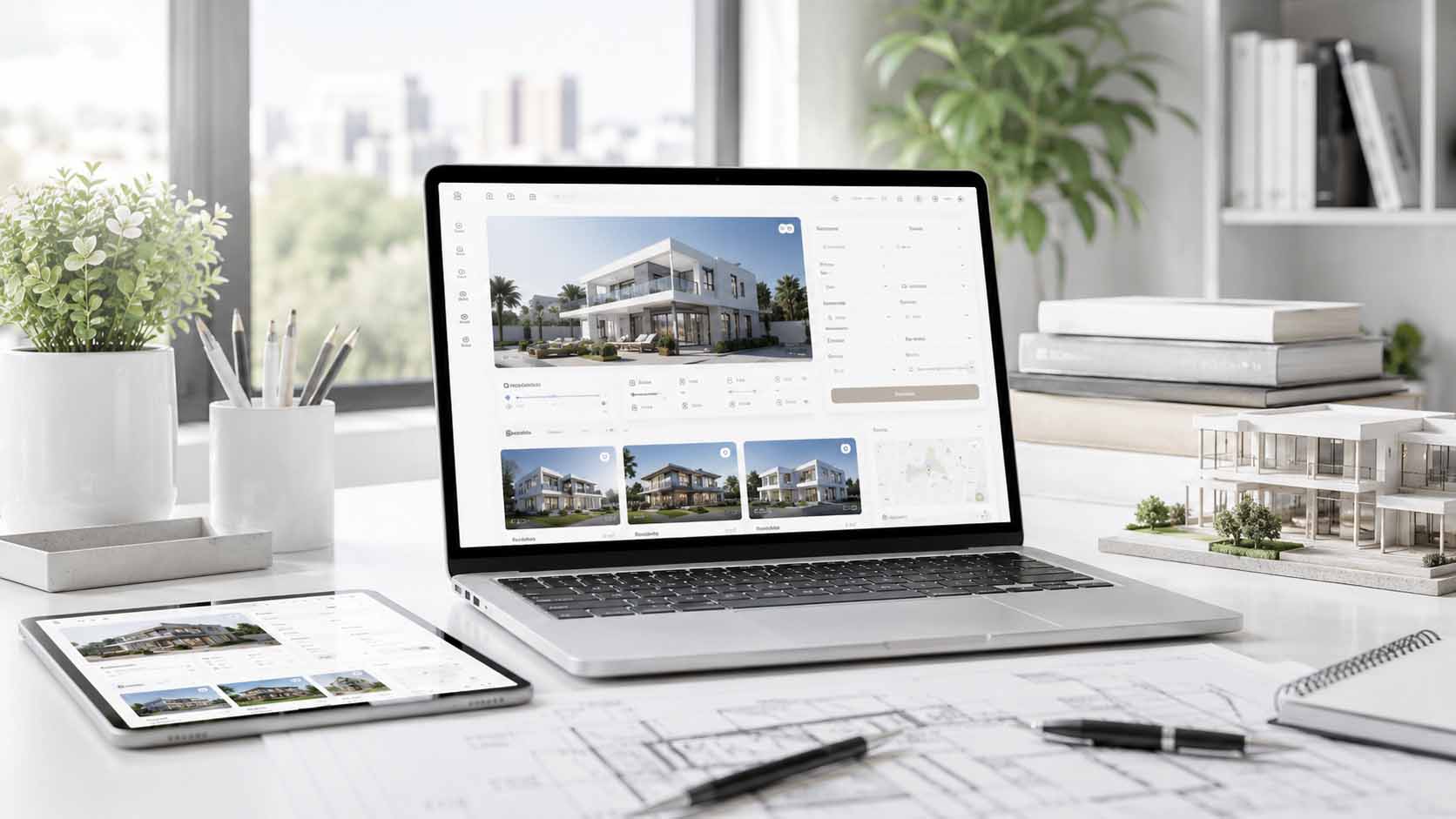
Real Estate Website Development in 2027: Essential Features Every Property Platform Needs
A few years ago, a real estate website could get away with being little more than an online catalog. A homepage, a few property pages, some contact in...
A few years ago, a real estate website could get away with being little more than an online catalog. A homepage, a few property pages, some contact information, and that was enough.
In 2027, that approach feels outdated.
People now expect real estate websites to behave more like complete digital products. They want to search quickly, compare properties, explore locations, view high-quality images, contact agents without friction, and do all of this comfortably from a phone.
That shift changes the way a real estate platform should be designed.
While working on HomeNest, I found that the most important part was not simply adding more features. The real challenge was deciding which features actually improve the property search experience and how they should work together.
A Real Estate Website Is No Longer Just a Website
The word “website” can be a little misleading when talking about modern real estate projects.
A serious property platform usually has several different sides.
There is the public-facing experience where visitors search for properties. There is the administrative side where listings are created and managed. There may also be agent profiles, media management, location data, inquiries, user accounts, and analytics working behind the scenes.
That means the project quickly becomes closer to a web application than a traditional marketing website.
And once you think about it this way, the priorities become much clearer.
The goal is not to fill the interface with features.
The goal is to make property discovery simple.
Search Is Where Most of the Experience Begins
Imagine opening a property website with hundreds of listings.
Without good search and filtering, the user is essentially being asked to browse everything manually.
That is rarely going to happen.
Most people already know roughly what they want. They might be looking for a two-bedroom apartment in a specific area, a villa within a certain budget, or a rental close to a particular location.
A useful platform should help them get there quickly.
This is why filters such as location, property type, price, bedrooms, bathrooms, size, and amenities are not secondary features. They are central to the experience.
The interface also needs to stay simple.
A search panel with twenty visible filters may be technically powerful, but it can easily become confusing. Good design is often about showing the most important options first and keeping advanced filters available when the user needs them.
This balance between functionality and simplicity was one of the areas I considered while building HomeNest.
Property Pages Need to Answer Questions, Not Just Look Good
Property detail pages are another area where it is easy to focus too much on visuals.
Of course, high-quality images matter. Real estate is an extremely visual industry.
But when someone opens a property page, they are usually trying to answer practical questions.
Where is it?
How much does it cost?
How large is it?
How many bedrooms are there?
What amenities are included?
Who should I contact?
A good property page should answer those questions immediately while still presenting the property in an attractive way.
The best layouts usually combine a strong image gallery with clearly structured information.
Instead of forcing the visitor to read a long paragraph, important details can be surfaced as structured data while the description provides additional context.
This also makes the content easier for search engines to understand.
Mobile Design Matters More Than It Looks
Real estate platforms often look impressive on large desktop screens because property images naturally work well in wide layouts.
But users do not always browse properties from a desktop.
A person might be checking listings during lunch, sitting in a taxi, walking through a neighborhood, or sending a property link to someone through WhatsApp.
That means the mobile experience cannot be treated as an afterthought.
Filters need to remain usable.
Image galleries should not become frustrating.
Contact actions should be easy to reach.
Text should remain readable without endless scrolling.
And most importantly, the website should feel fast.
If a property page takes several seconds to load because it contains twenty large images, users may leave before they even see the listing.
Images Are Part of Performance, Not Just Design
One of the easiest ways to slow down a real estate website is to upload large property photos without thinking about delivery.
A single listing can easily contain dozens of images.
Multiply that across hundreds or thousands of properties and image handling becomes a serious technical concern.
Modern formats, responsive image sizes, lazy loading, compression, thumbnails, and CDN delivery can make a noticeable difference.
The challenge is maintaining quality without forcing every visitor to download unnecessarily large files.
This is especially important on mobile networks.
In practice, image optimization should be planned as part of the platform architecture rather than added at the end.
Location Can Become Its Own Content Strategy
Real estate is naturally tied to geography.
That creates an interesting opportunity not only for users but also for SEO.
Instead of having only individual property pages, a platform can build meaningful location pages around cities, neighborhoods, communities, or districts.
For example, a visitor may not search for a specific property name.
They may search for:
“apartments in Baku”
“villas in Riyadh”
“properties in Dubai Marina”
A well-structured real estate platform can support these searches through dedicated location pages containing listings and useful local information.
This is where technical architecture and content strategy start to overlap.
If locations are modeled properly in the database, they can later support search filters, landing pages, breadcrumbs, SEO content, and navigation at the same time.
The Admin Side Is Just as Important as the Public Side
The public interface gets most of the attention because that is what visitors see.
But from a business perspective, the administration system can be just as important.
Property teams need a reliable way to create listings, upload images, update prices, assign agents, change availability, and publish or unpublish properties.
If every small content change requires a developer, the platform becomes difficult to operate.
A practical admin system should allow authorized users to handle everyday tasks without touching code.
For larger teams, permissions also matter.
An agent may be allowed to edit their own listings but not delete another agent's property.
An editor may prepare content but not publish it.
An administrator may need access to everything.
These rules are easy to ignore at the beginning but become much more important as the platform grows.
SEO Has to Be Built Into the Structure
SEO for real estate websites is not only about adding keywords to property descriptions.
The structure of the platform matters just as much.
Clean URLs, unique titles, meta descriptions, internal linking, image alt text, breadcrumbs, canonical URLs, and sitemap management all play a role.
For example, a property URL such as:
/property/512
tells very little to a user or search engine.
A URL such as:
/properties/modern-villa-baku
provides immediate context.
The same idea applies to category and location pages.
A technically good real estate platform should make it easy to generate these pages consistently without manually configuring SEO for every single listing.
Performance Becomes More Important as the Platform Grows
A platform with fifty properties may work perfectly with a relatively simple architecture.
A platform with fifty thousand properties is a different problem.
Search queries become heavier.
Images consume more bandwidth.
Admin operations become more complex.
Traffic increases.
This is where technologies such as caching, database indexes, CDN infrastructure, object storage, background processing, or dedicated search tools may become useful.
That does not mean every project should begin with a complex enterprise architecture.
In fact, overengineering too early can create its own problems.
The better approach is to build a clean foundation that can scale when the business actually needs it.
Security Is Easy to Ignore Until It Becomes a Problem
Real estate platforms often contain more sensitive functionality than people initially expect.
There may be user accounts, agent dashboards, contact forms, uploaded media, customer inquiries, and administrative tools.
That means security cannot be limited to adding HTTPS.
Authentication, authorization, secure cookies, rate limiting, validation, password protection, and file upload controls all need consideration.
The admin area in particular should never rely on obscurity.
A hidden URL is not a security mechanism.
Every sensitive action should verify that the authenticated user is actually allowed to perform it.
What I Learned From Building HomeNest
HomeNest gave me a useful way to think about real estate development as a complete system rather than a collection of independent pages.
The project focuses on property discovery, structured listings, filtering, agent information, and an API-driven architecture.
What became clear during development is that the quality of a real estate platform comes from how well these pieces connect.
Search should lead naturally to listings.
Listings should provide the information users actually need.
Agents should be easy to contact.
The administration side should make content management straightforward.
And the underlying architecture should remain manageable as the platform grows.
You can see the project here:
HomeNest — Real Estate Web Platform
Final Thoughts
The most useful real estate platforms in 2027 will not necessarily be the ones with the largest number of features.
They will be the ones that make complex property information feel simple.
Good search, clear property pages, strong mobile usability, optimized images, useful location data, practical administration, SEO-friendly structure, and solid security create far more value than adding features simply because competitors have them.
For developers, the interesting part of real estate website development is that it sits at the intersection of product design, backend architecture, search, content management, performance, and SEO.
And when those areas are planned together from the beginning, the result feels less like a traditional property website and more like a complete digital platform.